Fantasy, community and dreaming beyond your means with Maedb Joy
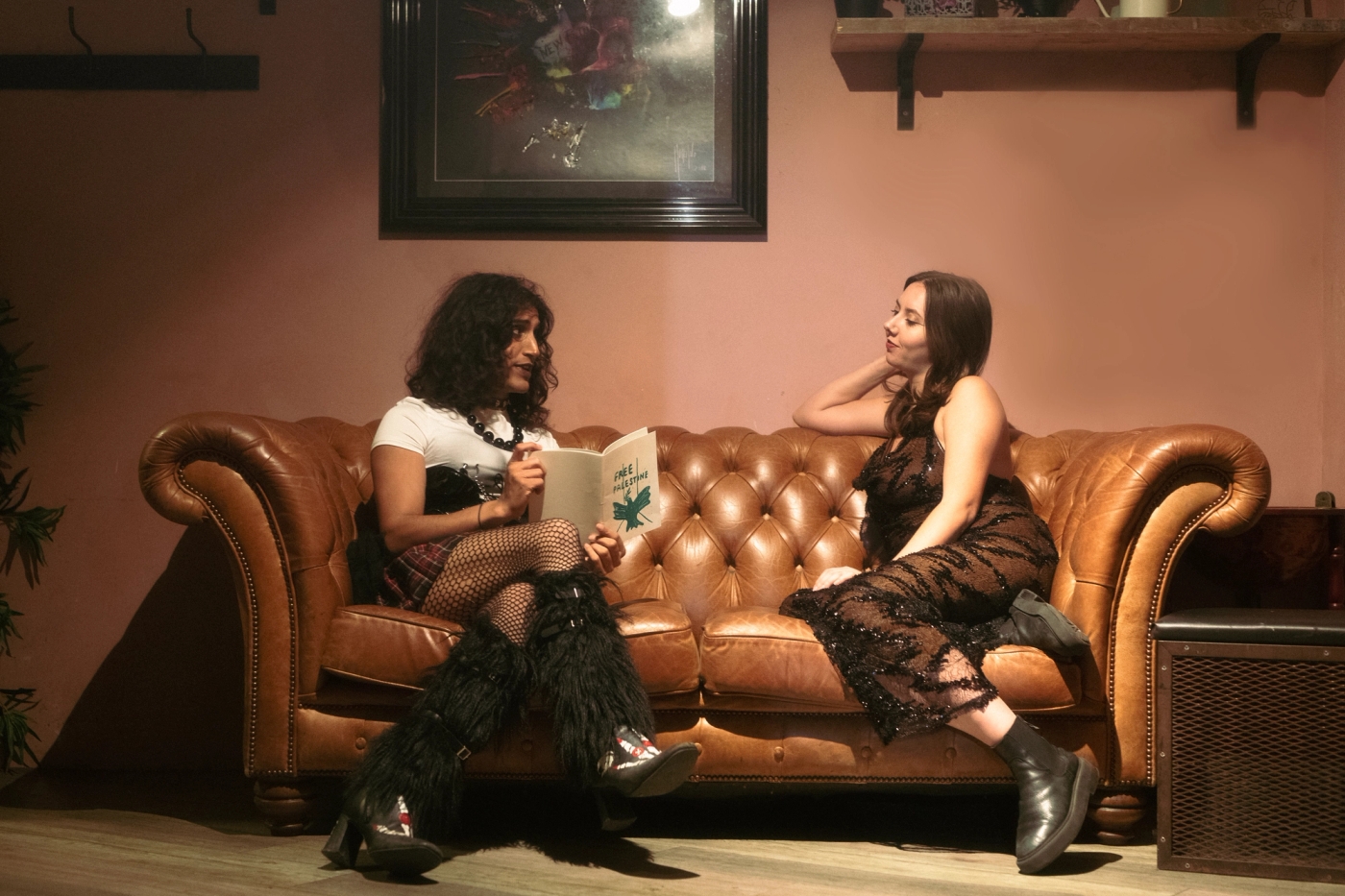
Hi dreamers. My name is Pretty Patel (she/they) - nightlife demon, DJ, performer, writer and a member of the editorial team.
Last October, I had the privilege of attending the party held by Riot at Lakota. Everywhere I looked, I saw a heady mix of leather, PVC and more horns in one room than hell itself.
Amidst the setup and anticipation, I caught up with Riot’s co-founder, the singular Maedb Joy. Maedb is a poet, actor, writer, theatre maker and curator, whose inspiring events have shone a light on the art of sex workers across the country. We sat down to discuss fantasy dealing, poetry, UK Sex Worker Pride and the importance of a dream.
Pretty: Thanks for sitting down with me today! I’ve been a big fan of your work for a really long time. Before we go any further, I have to talk about the huge success of UK Sex Worker Pride. I attended the Bristol event and it felt like such a triumph, especially given how much erasure sex workers are currently experiencing. It was such a dazzling coalescence of sex workers’ art, interests and reality. How did it feel?
Maedb: Yeah, really great! We've been doing sex worker pride events for a few years, but this felt like the first one of this scale. There have been events around the country, and it was really cool to have people that weren't sex workers as well, coming out to celebrate that with us and to make noise. I founded UK Sex Worker Pride because it would be cool to have a name, right?! Sex Worker Pride already existed, and it was founded by the Global Network of Sex Work Project. I was also inspired by UK Black Pride. And this is now written into history, and it's going to be something that gets bigger and bigger every year.
Pretty: On one hand, Sexquisite has been so successful in sharing sex workers’ artistry and perspectives. On the other hand, the Online Safety Act, the potential introduction of the Nordic model (see here) and the rise of SWERF [Sex Worker Exclusionary Radical Feminism] rhetoric is crucial context to all of this. What impact did this increased interest – bordering on public obsession – have on UK Sex Worker Pride?
Maedb: I think Sexquisite and Riot have definitely had an impact on how sex work is viewed and the public perception around sex work in left queer communities, and that’s really positive. However, we're a small microcosm, and while that's really positive, it also has its downfalls.
We do a lot of work to make sure that people understand that sex work isn't something that we're encouraging you to go and do – seriously, don’t do it! It's something that comes written in permanent ink. Creating spaces where sex workers are celebrated is all it is. It's not that we're saying, “You should quit your nine to five and do a career in sex work” because there's so many implications that can come with it.
If you're a mother or a parent, you could lose your child because you've done sex work. If you've done full service sex work, you're banned from America for 10 years since the last time you did it, and you can get arrested and detained for as little as carrying stripper heels in your luggage, which is crazy! Bank accounts are shut down all the time and societal stigma still exists beyond the left queer community.
(Indeed, the original Sexquisite Instagram account and its successor were both recently deleted by Instagram, despite following community guidelines. They have since been recovered).
And while it is mostly civilians that come to our events, it enables us to provide paid creative opportunities for sex workers, as well as community meeting opportunities where sex workers can come together and meet other sex workers. And there are also roles that aren't just on stage, like doing front of house, stage managing and photography.
Pretty: [At Sexquisite] I definitely felt the sense of joy among performers at being able to create and perform in that environment. I would draw some comparisons to the trans experience and drag. You get a lot of people who aren’t from the community being super supportive, and it's really great. But with that can come an almost two-dimensional portrayal of what you are and what your struggle is, and people saying “I'd love to do that!”. As much as it's nice to have these spaces, there's a lot of realities that aren't necessarily reflected by them.
Maedb: Definitely, that's really interesting, what you said about the parallels. There was a performer that performed when we did a Riot Pride afterparty. She's a stripper and she brought up a woman as part of her performance.
It was very sexy, but then after that the lady was harassing her, trying to get her to meet up with her and her husband. I just thought “God, like, you can't come into this space and behave like this”. This is all a fantasy, and beyond that you need to not harass and sexualise us.
Pretty: It’s interesting you mention fantasy. One thing I think most people don’t consider about sex work is the fact that, in many ways, it is inherently performance art. Sex workers sell a fantasy to clients, they sell dreams, and that is one of the least spoken about aspects of it. What do you think is the hardest part about selling a fantasy?
Maedb: A lot of people don’t really think about it. What's the hardest part about selling a fantasy? I think it is the experience of not knowing where it ends and where it begins. Where are you, in amongst all of that?
And you know, my main source of income now is working in events and the creative industry. Yet it feels similar, dressing up to become an extension of yourself, to be perceived by others.
I feel consumed in the same way. I feel like that when I'm talking to lots of guests or attendees, and I'm happy. People want proximity to you, and they want to consume you, and it reminds me of how clients get. There is this idea that you're happy, and you're selling a fantasy, and this is life. But I guess it's not really you, and you have to make sure to carve out time for yourself.
And that's the same in sex work as well. If you're a fantasy all the time, you're gonna go mad.
Pretty: I DJ and perform, and there's definitely elements of persona involved. It comes up a lot in conversation with other performers, where the characters end and we begin.
Is the persona a manifestation of a small part of you that becomes a bigger part of you because you've given it oxygen? As it starts to take on a life of its own, at a certain point you ask “Where did this come from?”.
Maedb: Yeah, I really agree with that, and it's interesting what you say about DJing becoming a persona– there’s something about nightlife that ignites a different part of ourselves. I find that interesting about Riot and parties where people come and dress up – it's almost like a participatory performance.
And they're, you know, performing to each other. And I think there's something in nightlife that is a bit of a fantasy that doesn't really exist too.
Pretty: But the question is, is the ‘real’ you day-time you, or night-time you?
As someone who is trans, I have always found my biggest supporters to be sex workers. There has been a sense of kindred sisterhood between us. I believe this is because a lot of the challenges faced by both at the moment have some crossover. Whether it be prohibitions from essential day to day activities, appropriation combined with dehumanisation, or the seemingly endless obsession with us from cisgender straight men. Do you see a lot of solidarity between the trans community and sex workers in your own community organising?
Maedb: Definitely. I think the queer and sex worker movements have always been intersected, and lots of sex workers are trans as well. I think there's that universal shared experience, when you're marginalised – to an extent you understand each other.
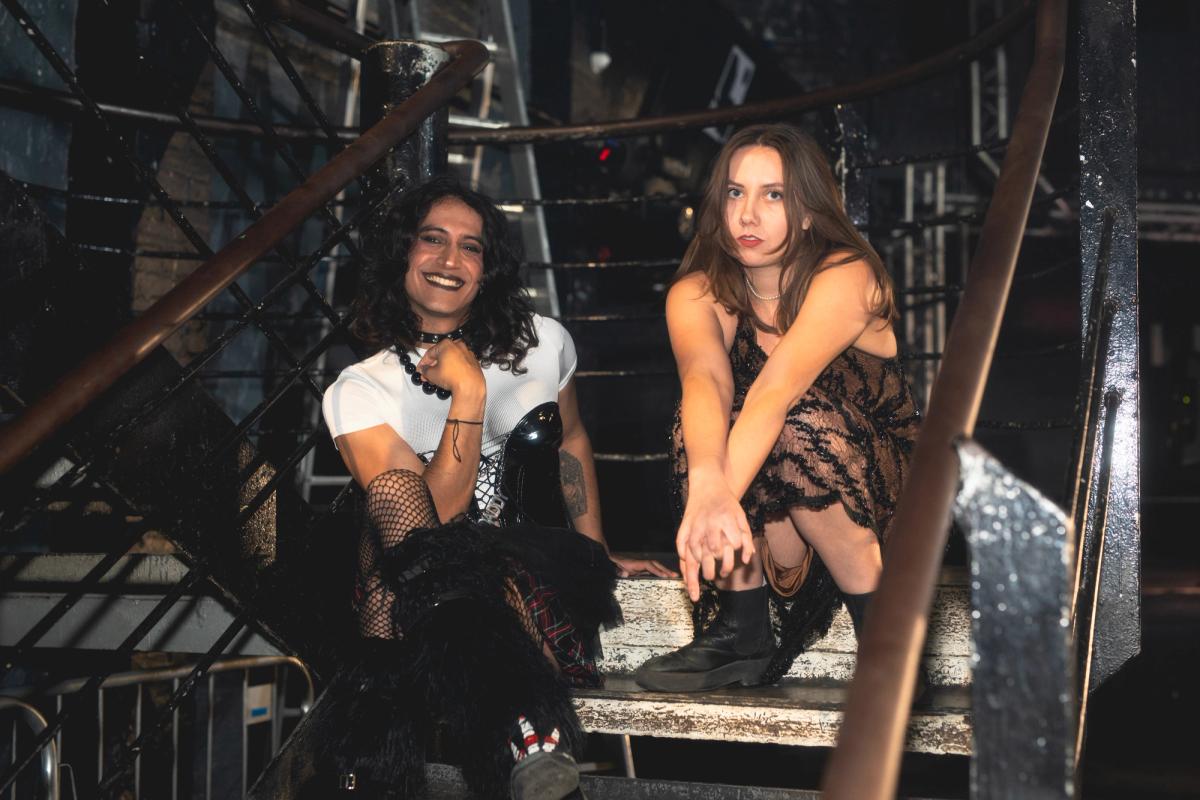
Pretty: For the Bristol event, you collaborated with Bristol Sex Worker Collective (BSWC) - what have been the highlights of your collaborations so far?
Maedb: I've been working mainly with Jessica Risque, who's from BSWC, and they were amazing. We actually grew up in the same tiny town called Frome! I also grew up in London, moving between both.
Working with Jessica has been amazing. They are really great, and they have been handling all of this stuff with BSWC. The collective have had a really hard time in Bristol over the last few years, trying to fight to keep strip clubs open, and they have been successful! I think they're such an amazing collective. A group of bad bitches that you know are such socialists. They're a force to be reckoned with and you feel the spirit of collective action – working with them is really special.
It's cool to bring Sexquisite and BSWC together because they're two different communities of sex workers, and we want to have this cross-collaboration between sex worker communities in different cities. I think that's really important, and we can bring each other on for different projects.
Pretty: So speaking of collaboration, just a quick moment to talk about the work you have done with Kate Nash! As far as dreams go, how did that feel?!
Maedb: It felt amazing. I've been a big Kate Nash fan since I was about 11 years old. I really looked up to her a lot and she's fucking incredible.
Basically, one day an amazing rapper - who I also listened to a lot when I was younger - DM’d me on Instagram while I was in Mexico. He told me “Oh, someone's recommended you to come on this podcast for Kate Nash to talk about her doing OnlyFans” – for those who don’t know, she talks about doing it to support her artistic practice and keep her music career aligned.
I remember I kept re-recording the voice notes because I had to state my case for why I'd be great on the podcast. I looked at my girlfriend and she said “It's fine. Just send it!”.
I think I did well because he invited me onto the podcast. Kate and I discussed sex work and art. I spoke about Sexquisite being an arts company and how most of us do sex work to support our artistic practice, which was a cool alignment.
We spoke about both being women from low-income backgrounds and without generational wealth, and how you have to make it work. I ended up opening up about some things that I'd been through, which I didn’t expect to do. This keeps happening! I tell myself I'm going to keep a secret, but then a big opportunity happens and I just say it. I think with exposure and good opportunities, maybe it helps the internal shame and sex stigma?
At the end of the podcast, she asked me “why don't you do an after party for my Kentish Town Forum show?” She told me to take her number, and invited us to do a private show for her and her crew after the show.
We met her whole band. I met her mum! I was doing some poetry. My friends did some songs. April Fiasco did a cabaret act about strip clubs getting shut down, and someone else did a sexy strip show, it was really fun.
Pretty: Amazing! I love a dream come true moment!
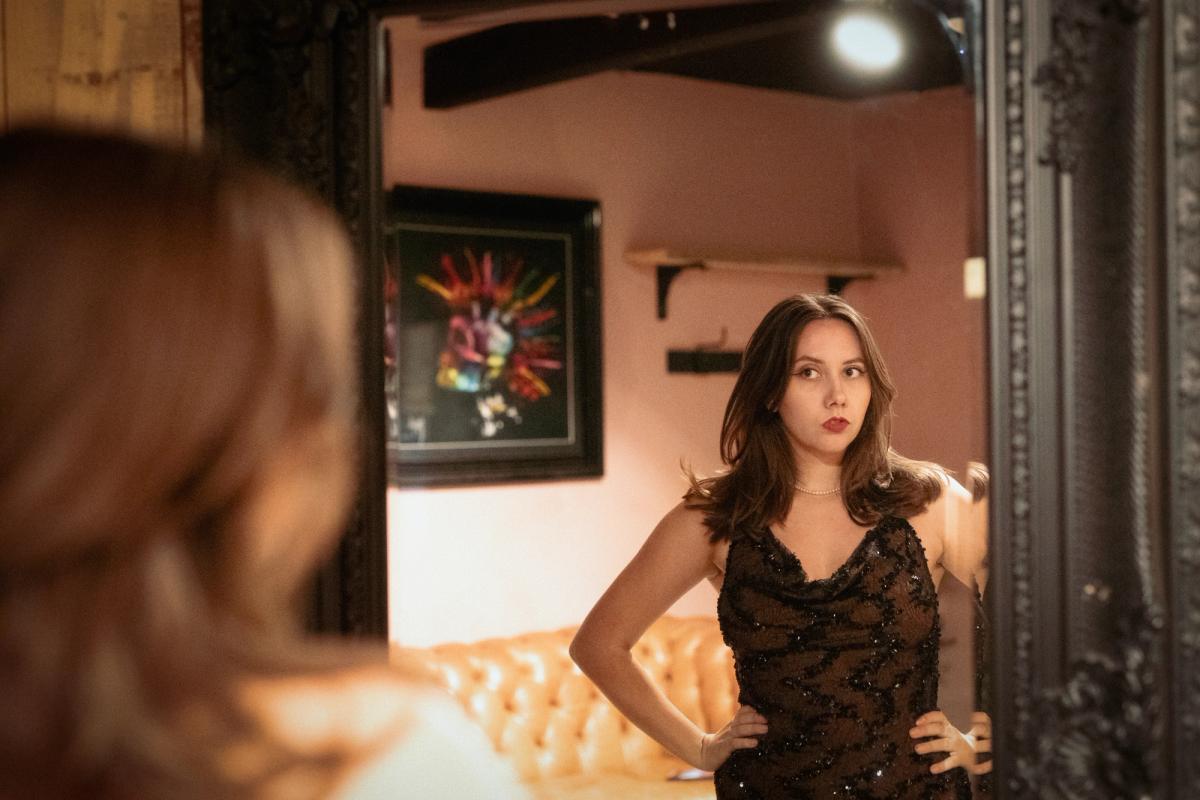
Pretty: I want to discuss your poetry. I heard it live at UK Sex Worker Pride and was blown away. During “14 excuses why I can never escape sex work” I went from laughing (the law conversion line hit home a little too hard as someone who has recently left practising) to near tears (“living at home never was and never will be an option”). That poem is important to me and I’m sure so many others who have heard it. When did you start writing poetry, and what does it mean to you?
Maedb: I started writing when I was younger - I would write a poem every day when I woke up. I have a vivid memory of writing a poem from the perspective of my dog asking where my dad was.
I basically fell out of school and stopped creating and thought it was really uncool to be creative. I completely fell out of love with it, and then moved from Somerset to London, and I had a road accident where I almost lost my right foot. I had to sign permission for them to amputate my leg when I was 16. So, I started writing again in hospital when I was recovering, and I started by rewriting poems from Tumblr. I was pretending they were mine, and showing my Mum and Godmum because I was a terrible kid.
I had just got into a lot of trouble with the police and stuff, so I just thought “please be proud of me”! And they were. I think that approval led me to me actually writing my own stuff, and I started writing about stuff that happened to me.
As I was recovering from the accident, I started working at a little deli and they had an open mic, and I started performing poetry there. And yeah, I don't know. It was over for me, I fell in love with poetry.
Pretty: Amazing. I've written on and off all my life. The thing about being involved in corporate law, is it takes essentially your talent for writing or passion for writing, and it completely lobotomises it and weaponises your joy of the English language. Now that I've left it, I'm looking forward to writing more creatively. It's just weird - words don't look and feel the same to me anymore, and so I understand that, when you take a break from it and then rediscover it, it's like finding an old friend.
Maedb: Oh my God! I love that.
Pretty: I was reading about your performance Home Sweet Hell recently, and the title alone struck a chord for me. That feeling of having nowhere to go if life doesn’t work out is a frequent one for me. One quote I read from the performance that really hit home was “we had these dreams that were bigger than the people and the places we knew”.
It's something I find myself explaining to people all the time. “Why do you put so much pressure on yourself? Why do you need to do this stuff?”. Because I don't have anywhere to go back to, where I might exist as I am. Would you be able to elaborate on what those bigger dreams were?
Maedb: I wrote that specifically about me and my ex-boyfriend who went to drama school together, and we were living in his room in a house in Croydon, splitting £600 a month rent. We were living on top of each other, working so much, but still so broke.
We were at this posh drama school, where everyone came from really rich backgrounds, and they had allowances from their family, and they didn't have to work. Everyone was talking about getting signed, and all the famous people that went to our school.
And so there was this pressure on us to have these dreams, which we did, and to ‘become something’. My reality was very different. I went to a pupil referral unit where they didn't enter us for our GCSEs. I left school without any GCSEs.
My mum is a single mum. She was a music journalist, but the paper shut down. She had me, she became a teacher. We were very poor, growing up like that. Lots of my friends are just trying to get through the day, let alone dreaming, you know?

Pretty: I was also reading about your show $tripped!, which you described as magic realism. Do you find that a sense of absurdism and magic realism in some ways can seem more relatable than more ‘grounded’ or ‘realistic’ narratives, and how does this affect your writing?
Maedb: Well it was a theatre cabaret show, so it had a linear story, but we were all multi-disciplinary artists, so we use magical realism as a way to sort of do spoken word pop-ups or a burlesque act, or like a crazy game show. We rewrote Big Spender to Small Spender. We rewrote the Cell Block Tango in Chicago, [replacing the backstories of the characters] with the reasons that we all entered sex work.
We also did a game show called the Wheel of Whoretune, where we spoke about the comparative privileges within sex work. We were a predominantly white cast with one person who was mixed race, and we spoke about how, like, if you're a skinny white girl, like, woo you win! You get to go home with this much money, or if you're a woman of colour working in the strip club, then you lose out. We used it as a way to talk about the fact also that we were only able to write the show because with a majority white cast, we probably earn well for sex workers, and can take time off it.
Pretty: Speaking of shows, I know that on October 25th you’ll be performing in My Pussy Paid For This Show in London. I noticed this mentioned that the performers will be getting a chance to perform the art they really want to. How will you be doing so in this show, and what is the art you really want to perform?
Maedb: So, My Pussy Paid For This Show is a split bill between me and another artist from Sexquisite, and we've been awarded the funding to make the show. They wanted us to do a Sexquisite show, and we said, “Actually, no. This is an arts festival”.
We always get booked to re-perform sex work for queer audiences. I want to do sad-girl-spoken-word, and Milk Maiden makes angry feminist folk music. And we thought, we want to do a show with our art. And then they were like, we need to take time to consider that. It made me think, do people actually care about our art?
So the show is basically a split bill with my poetry, her music. We've got improv musicians, and we're going to have dancers from Sexquisite, doing interpretive dance rather than sexualised dance. We're addressing this trap of when you're from a marginalised community – where you pigeonhole yourself so much that you don't know who you are. You don't know when the pigeonholing started, and you can't really end it. It’s this feeling of, I've shoved myself into a box so much that all my poetry is about sex work. Sexquisite got really successful, and I'm really grateful. But I know how to write for that audience, and it's molded my artistic practice. So much so that I did a gig for a more mainstream audience recently, and I performed that work, and people were like, really fucking shocked.
So I thought about that. And, I guess, when you get positive affirmation from something, or approval, you do it again. You're like “Oh yeah, let me do this. Let me tell the r*pe story”. Exploiting ourselves for performances – is that the same as sex work?
Pretty: For my final question, I want to talk about community. You have said that your practice “is driven by a deep belief in the power of art to make change on a personal and social scale”. When in your life has making or experiencing art brought about a change in your reality? Has this led you to look to empower others?
Maedb: I was very isolated when I was younger and faced a lot of stigma.
I was writing about my experiences when I was at school, but through character. When I started Sexquisite and I met people from the community, I slowly became more open about my life, and then people liked my work. I'm unlearning this horrible shame that I felt. It’s hard to explain, feeling that trapped.
I'm sure you get it as a trans person – the world doesn't like who you are, and that really fucks you up, I think. Finding my people and finding my community has changed my life.
I remember being young and telling myself if anyone ever found out, I'd k*ll myself. My mum found out, and I remember going to a bridge, and a friend ended up stopping me.
If I can stop other people feeling like that, I feel like I've made a change in the world. I think Sexquisite and Riot and bringing people to community is really life-changing, because if you're in an army of people like you, then fuck everyone else, right?
Maedb will continue to throw pioneering events Riot and Sexquisite across Bristol in 2026, as well as continuing to write poetry and shows. Riot’s next Bristol party will take place on 13 March 2026.
Show your support for Maedb’s work by following her Instagram @maedbjoy
Resources:
For more from Maedb - https://www.maedbjoy.com/
BSWC - donation page https://www.paypal.com/paypalme/Bristolswc
Oppose the Nordic Model - https://decrimnow.org.uk/open-letter-on-the-nordic-model/
Repeal the Online Safety Act - https://petition.parliament.uk/petitions/722903
Images by Emily Parker @emilyparker.photography
More from Creative


