Women by Women.3 review: expanding the idea of womanhood
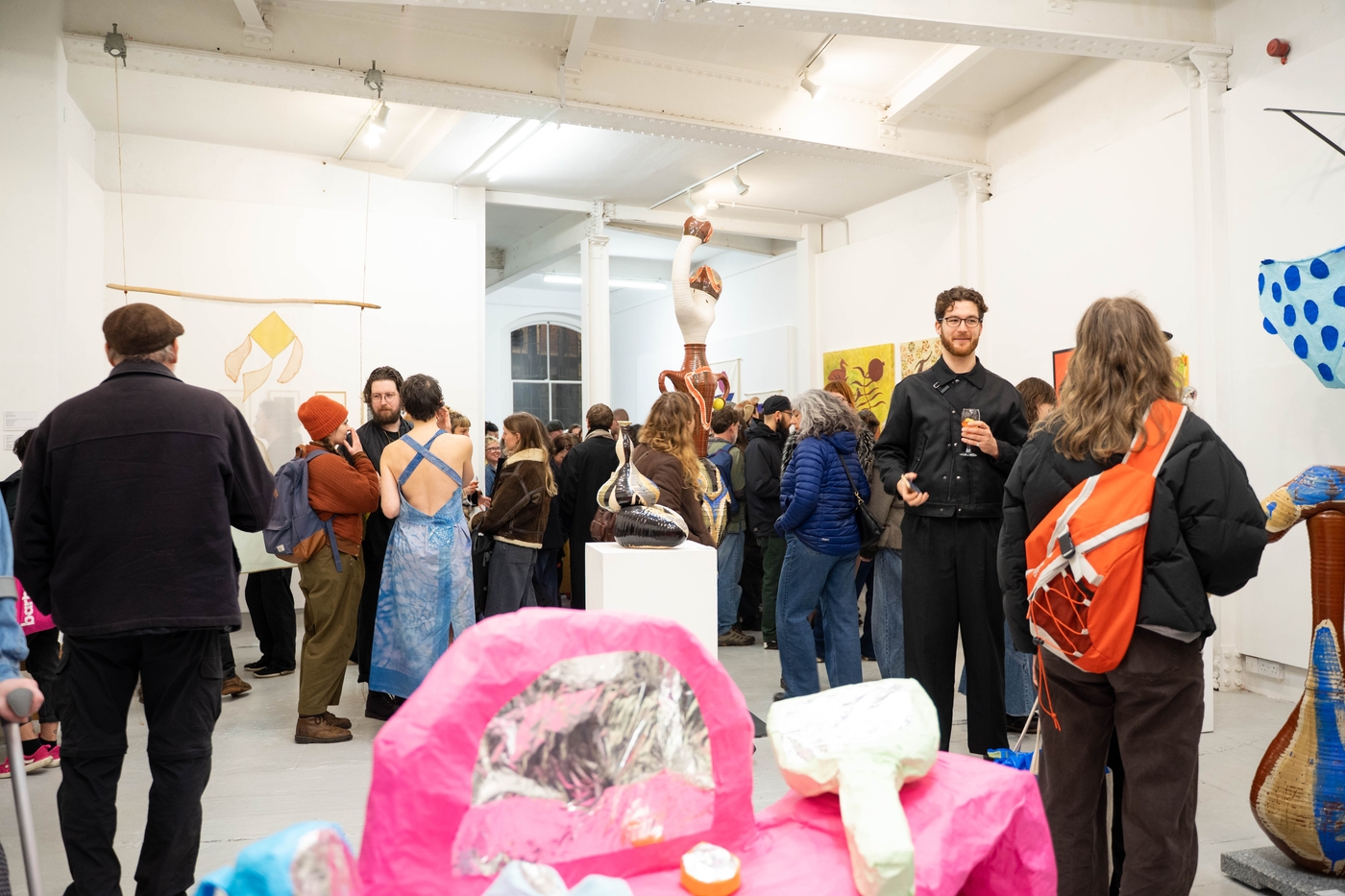
'Women by Women' is an annual group exhibition that marks International Women's Day, and strives to broaden why, how and who we celebrate on this day. The first time I attended was last year, alone on a peaceful Tuesday afternoon. This year, I arrived for the opening night on Friday March 6th to a very different environment – Centrespace was packed to the rafters. I navigated the excited crowds, thankful to my noise-cancelling headphones for giving me a chance to focus on the work.
This year’s exhibition includes 24 female and non-binary artists, curated once again by Sanni Pyhänniska. Each of these artists tells a unique story with their work. Yet, the effect of these works sharing space is multiplicative; they are woven together in conversation, a shared history and a communal experience. This collection of work explores the joys, pains and complexities of womanhood through a variety of personal and communal perspectives on identity, relationship and body.
On this return to Women by Women, I enjoyed the mixture of familiarity and freshness I experienced in the space. I’ve followed the work of some of the artists exhibiting, such as Ana Clark Ribeiro, Amber Bardell, Claudia Naen, and Sonja Burnie for some time, so I was grateful for the chance to see these latest steps in their journeys – new mediums, new perspectives on previously-explored themes – as well as discovering the work of other artists.
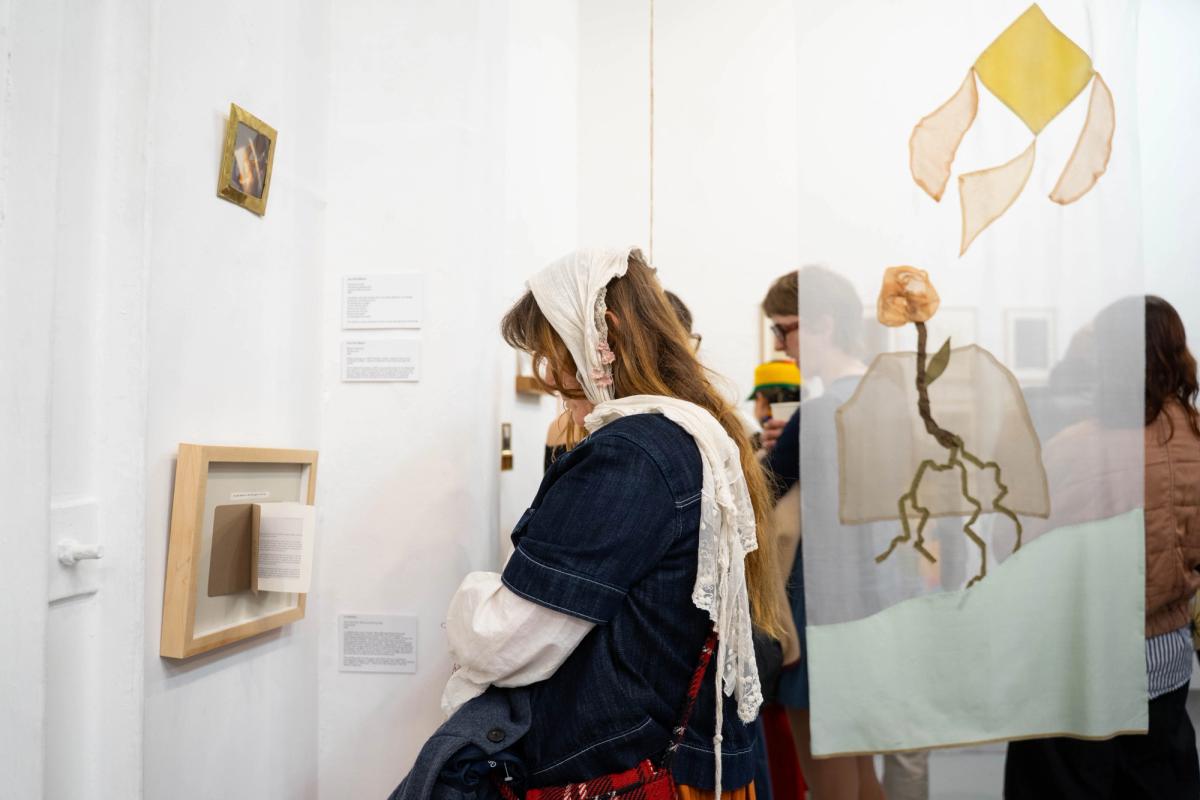
One of the interesting developments I observed was Ana Clark Ribeiro’s work Protective Cloth, a handsewn silk appliqué piece she refers to as her “sheer defence”. Ana is pictured standing behind this piece in her giclée print Being Protected – wearing a dress she created for the first Women by Women exhibition in 2024, a dress she called Wild Freedom. The conversation Ana is developing across mediums and over years shows the evolution of one woman’s thinking about her freedom, her body, and the power in reclaiming agency and choice in how and when she engages with the world.
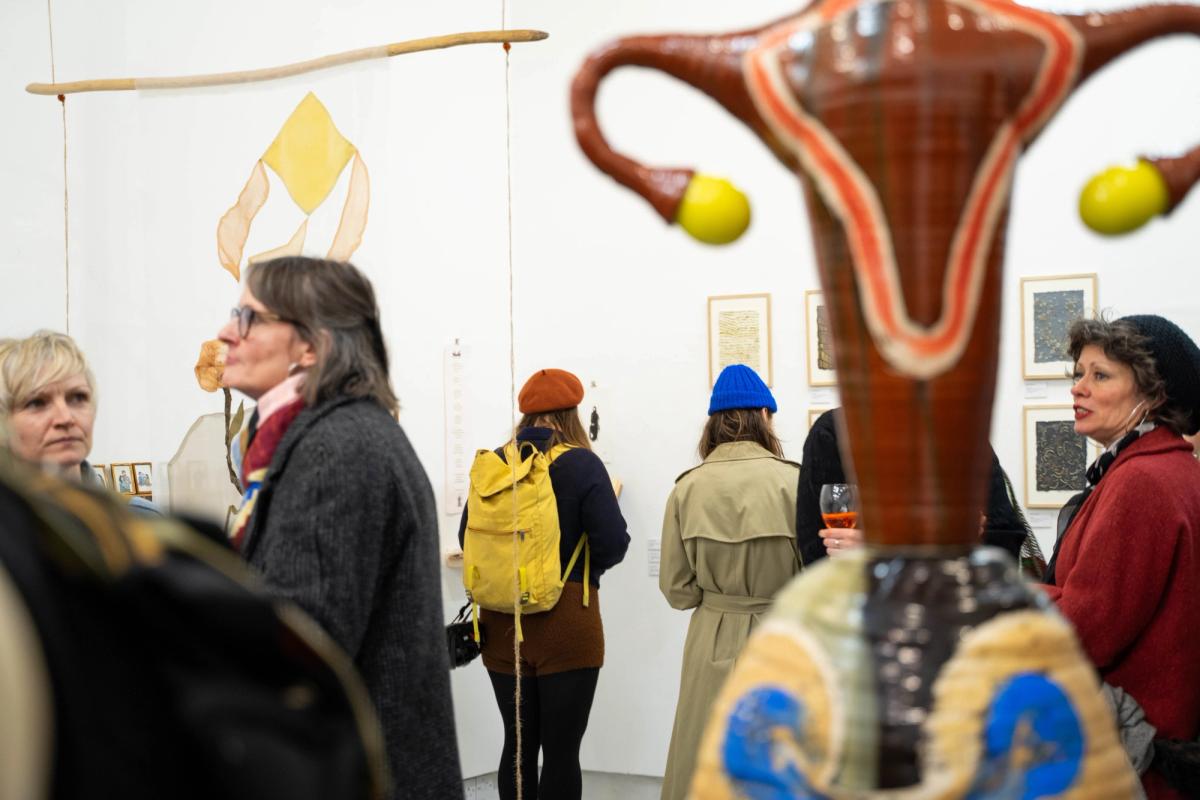
Claudia Naen (founder of Tapuh, a slow fashion clothing and art brand) contributed a ceramic piece inspired by the narratives women have preserved through craft. Only familiar with her textile work so far, I enjoyed this method of dialogue about craft as art. Hidden Hearths asks us to consider how the significance of female artists is dismissed when their art takes place within a domestic setting.
In comparison to Women by Women.2, I noticed certain themes that could be described as ‘innate’ to women were expanded upon, such as experiences around childbirth and biological motherhood, and I was pleased to see them alongside intersectionally inclusive themes of womanhood. During an age where gender essentialist ideas seem to be resurging, finding this balance is important – to incorporate experiences including and beyond those of cisgender women to portray an expansive idea of womanhood.
For example, Fra Beecher and Jocelyn Allen’s collaboration explores some significant aspects of womanhood like the ‘biological clock’ and maternal instincts – it was refreshing to see a conversation about the internal conflict some women face around having children and how our reproductive reality affects this decision. The piece includes a callout for collaboration and connection – Fra invites other child-free women her age to be involved in the project. Time with Emily Gibbard’s sculptures – lush, round, strong, and clearly a labour of love – brought with them a sense of acceptance and gratitude for the shape of my own body.
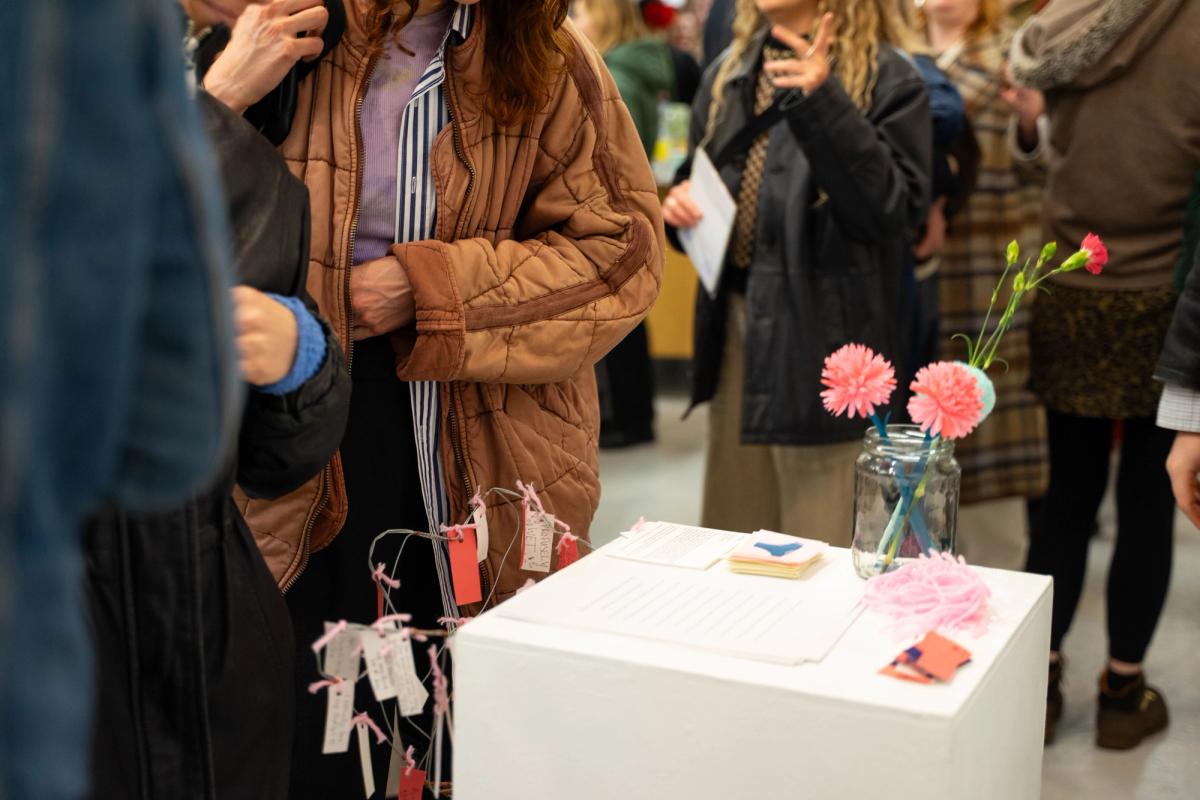
Lighting up the space with a giant pair of polka dot pants, I loved Jazz Potter’s use of a mundane, everyday object to spark conversation and reflection in Laundry Day. Her wire-and-textiles interactive piece encourages women to share their ‘knicker stories’ in notes tied to the wire pants. Reading these reminds the women in the room that none of us are perfect, or need to be. By giving the floor to the audience, this human, interactive piece lightly questions the performance of womanhood and the discomfort that often comes with it.
The inclusion of Dani Hawkes’ powerful collage poetry got me thinking about empathy as inherent to femininity – reading “God damn it, you’ve got to be kind/ Despite everything/ We must love each other/ From now on to the end of human history/ Are you gonna drop the bomb/ Or not?” from Fighting the battle of the ‘bulge’. Both this piece and Sanni Pyhänniska’s Intuition prompted me to consider: what parts of “femininity” are useful to us? It can be difficult to ascertain what of ‘womanhood’ is made up of harmful gender roles or arbitrary nonsense, and this exhibition helped me to find aspects of femininity that I can connect with – traits I want to keep, to celebrate in others, to perpetuate. Intuition stakes the claim that the wisdom of women doesn’t have to readily fit the expectations of patriarchal logic. Our intuition is informed, and therefore vital. This message connects to Ellie Shipman’s scanograph piece Unheard, which reflects on the tensions of motherhood and medical traumas of birth.
Some pieces accounted for the more fluid aspects of femininity, such as Amber Bardell’s Give and Take, an ode to symbiotic friendships and networks of support and care. Bardell continues to grow and flourish in this exhibition, finding ever more ways to bring the viewer into a space of peace, warmth, and sensory delight. Amber is currently in a new stage of their work devoted to the use of natural pigments, and they are thriving within these limitations. Their paintings and sculptures are beautifully contained in this gentle, earthy colour scheme, while still feeling surprisingly energetic.
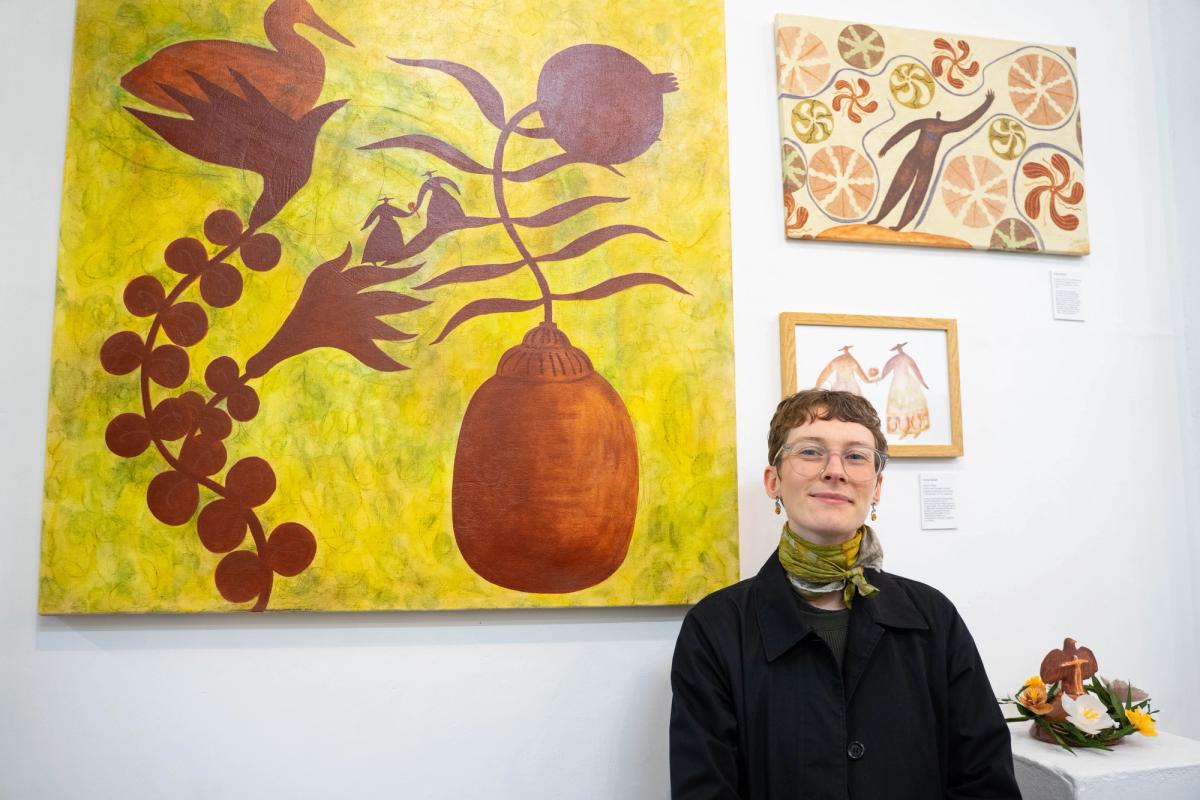
Sonja Burnie’s screenprints included a small zine-poster incorporating John O’Donahue’s ‘Beannacht / Blessing’. This poem, incorporated with her dreamy use of colour and knack for capturing tenderness in relationships, ties in with the atmosphere of Women by Women.3 as a whole – evoking themes of interconnectedness, natural ways of being, and abundance. Emily Seffar’s gouache paintings and assorted trinkets were similarly celebratory of the love and care that is propagated by connections between women, particularly within the family.
This focus on building connection goes beyond the exhibits themselves – when I asked Sanni about the process of bringing together Women by Women.3, she told me: “the people coming together on the install day is just so special - there’s already these preexisting relationships and inside jokes – and with the new people getting involved, I think the space allows a lot of connections to happen very quickly. A lot of friendships have formed through Women by Women because everyone’s already got something that connects them. I open the door, and people are making friends and helping each other, and taking initiative!”
Sanni started the Women by Women exhibition series three years ago - since then, the project has raised funds for charities such as UN Women UK's Gaza Emergency Appeal, Women for Women International's Palestine Crisis Response, and the Global Fund for Women.
Women by Women.3 will be available to visit at Centrespace Gallery until Wednesday 6pm, and tickets for their workshops – Body Scans: Mindful Painting, Life Drawing, and Collaborative Poetry – are still available here.
Photos by Sinag Yuson (@sinagyuson on Instagram).
More from Creative


