Enter Sleep Mode
Sleepmaxxing, Reviewed
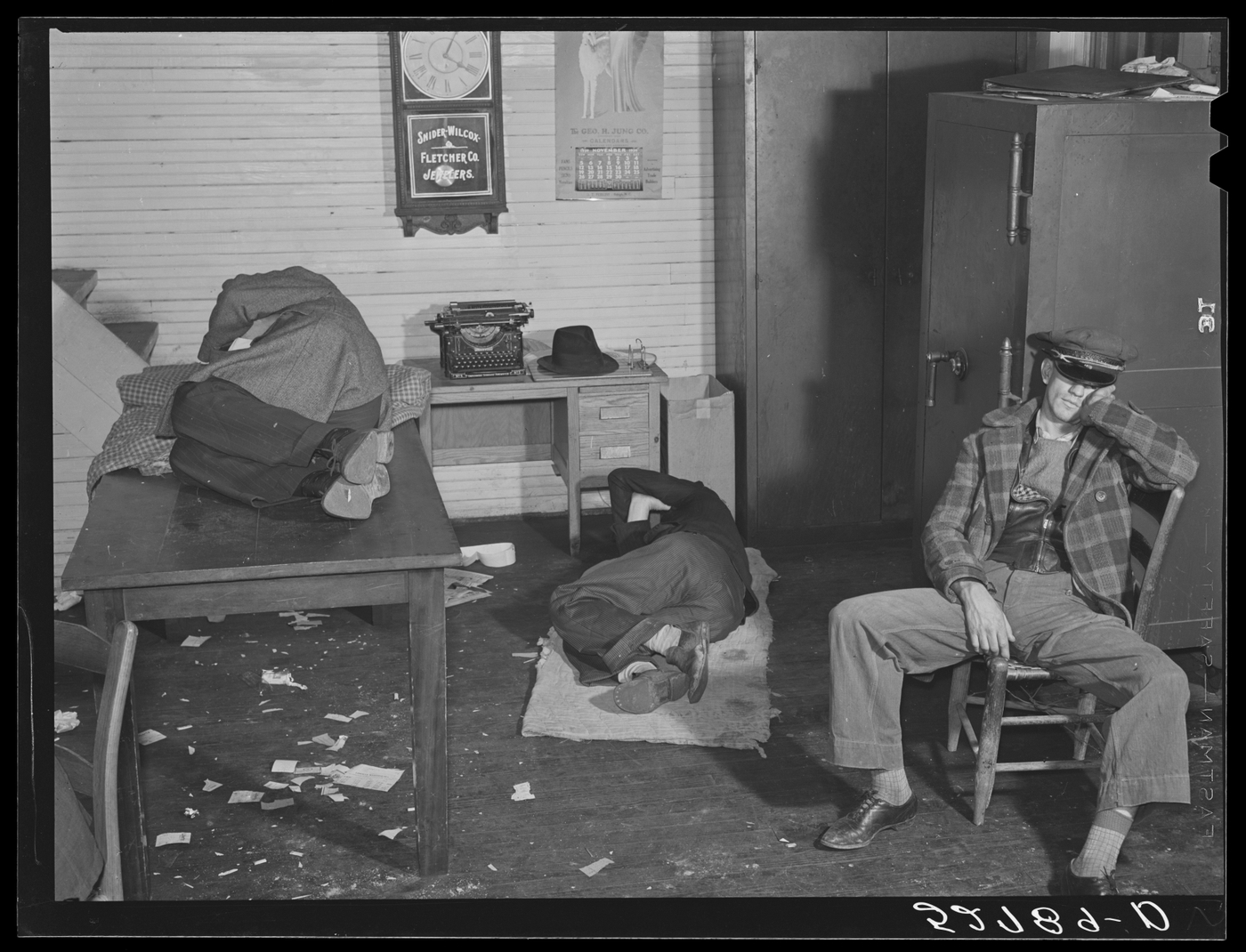
One memorable morning I woke up in New York to the sound of a couple of the NYPD's finest laughing not far from me. I was in a park—though which park, I still couldn't tell you. "I wonder what the name of this park is" just didn't seem like the most pressing question of the day, as the overbearing June sunshine dried the sweat on my face before extracting more.
A bewildering start to the day, but not the first time I’ve greeted the morning feeling perturbed. When I was a kid I had horrifying, extravagant nightmares where I'd wake up and my saliva would taste like a sour, poisonous cud. Sometimes I'd vomit. But I’ve also endured more pedestrian nocturnal dysfunction like, oh I don’t know, snoring and flailing. All this to say that I've had problems with sleep throughout my life (who hasn't?) and to draw a distinction between the kind of disordered-alfresco-blackout sleep that sees you waking up in parks and the kind that's merely suboptimal. Curiously, the dark magic of what’s variously called the “sleep economy” or “sleepmaxxing” chiefly appeals to this latter category because the desire to fine-tune a lacklustre wellness/productivity/longevity index is born of dissatisfaction rather than pathology.
All kinds of neuroses and social factors can have a profound impact on sleep: narcolepsy, insomnia, being a new parent, addiction, shift work, anxiety, poverty. Take your pick. Precisely none of these problems, though, can be remedied by purchasing a new chunk of ergonomic metal or downloading an app. And yet a whole industry—wearable tech, deluxe mattresses veined with sensors, creepy bedside golems—has emerged to exaggerate, cater to and then exploit our increasingly thorny, conflicted relationship with sleep.
When you’re waking up in strange places or else deranged by a persistent failure to sleep much at all, something like a “sleep efficiency score” is unlikely to provide comfort or guidance. It’s the privilege of the more-or-less-well-rested, the approximately functional, the fine-thanks-just-a-bit-tired type of individual, to fret over subpar sleep.
My sister is a lifelong hypochondriac. Late last year, I was at our grandmother’s house with her and her fiancé, and the conversation over breakfast turned to sleep patterns, their measurements and the paucity of decent rest. I’d heard about tools and software that examine sleep patterns before, but always assumed they were the kinds of things endorsed by Bryan Johnson, chief productivity freak and harvester of his own son’s plasma.
For my sister, these gadgets seemed to be having the paradoxical effect of mollifying her anxiety while giving her more to worry about. But whether that really amounts to a paradox or a pitch to investors, I wasn’t sure. More to the point: is there really an epidemic of sleeplessness overwhelming modern society? And if there is, does more surveillance, more metrics, further analysis, seem like the proper solution?
Before I'm accused of tendentious armchair philosophising, be assured that I’ve been dipping my own toes in the murky, contested waters of sleepmaxxing. My morning constitutional—hitherto consisting of burning my breakfast and cursing the day I was born—now involves perusing data on an app called Sleep Cycle, which has been monitoring my sleep for the past week.
It’s on this app’s interface that I discover I live in an area with "elevated rates of coughing"; that this blight would be all the worse if I lived in Weston-super-Mare; but would be alleviated were I to relocate to Bath. The fact I make distressed noises and grind my teeth throughout the night should be disturbing, but I've already been told this by every poor bastard who's ever slept with me.
Luckily, Alexander Skarsgård is here to help, for it is he who’s been recruited to tell me a bedtime story via the app: “I was travelling across the oceans in search of a place I could call home… I was looking for a place where I could slow down, find rest and comfort, and be at peace with all the thoughts that assaulted my mind,” he says, deranged and sexy, sounding like he’s fumbling a noose and fondling my hair at the same time. Despite the timbre of his voice and the vague maritime cluttering in the background, this wasn’t even calming, never mind soporific.
The app does yield some data though: there’s my respiratory rate, the level of ambient noise, and some choice recordings of me, variously, snoring, grinding my teeth like floorboards in a horror film, and talking to myself (not in English or any other language I understand. Which is none.) The sleep score does something for me, I suppose. It’s a bit like Strava with all the useful features removed. Luma is my AI sleep coach who can answer things like “How can I fall asleep faster” and “what patterns do you see in my sleep?” The latter is psychoanalytic in flavour; the former I could just Google.
There’s a competitive element here, too: social media algorithms incentivise one-upmanship even when it comes to something as banal as sleep. The question isn’t really “should we be trying to improve our sleep?” but rather “is this really about something else?” Online content focused on morning routines, wellness and personal optimisation, it seems to me, is chiefly about control. About broadcasting agency and discipline and a life well-lived. What is biohacking if not the ultimate signal of self-possession and mastery over the body?
For the most part, these apps and wearables (such as Oura, Whoop, etc.) are wellness products, not medical interventions. They are designed for people whose sleep is already fundamentally fine but who, having exhausted every other appealing avenue for self-improvement, have turned to the realm of the unconscious, cocked their heads quizzically, grimaced, and concluded: those few hours I spend in the fetal position sandwiched between the stressors of merely surviving the twenty-first century? Those are wasted hours. Uninterrogated time. Time that isn't working hard enough.
Some of this is funny, and some of it is somewhere between interesting and useful, and some of it is sinister. When brawny consultants inform us that “the economic costs of sleep deprivation are estimated at more than $400B annually for the USA alone,” we start to catch a glimpse of the other forces at play.
In The Attention Merchants, media scholar Tim Wu details the rise of advertising from rudimentary notices in newspapers and the colourful posters of Jules Chéret to the technology-enabled, modern attention economy. "Over the last century," he writes, "we have come to accept a very different way of being, whereby nearly every bit of our lives is commercially exploited to the extent it can be." This relationship between vendor and consumer amounts to a "grand bargain": we trade our time and attention, our eyes and ears, for convenience and entertainment.
Wu goes on to say that “the attention industry in its many forms, has asked and gained more and more of our waking moments." And now, the hydra of contemporary marketing, not content with the almost total annexation of our waking attention, has found ways to intrude on our sleep. Until recently, those hours were unavailable for commercial exploitation, simply because our attention couldn't be coaxed or diverted while we were unconscious. But while you can't advertise to someone who's asleep, at least not directly, what you can do is monetise the data they generate. And you can monetise the resulting angst, too.
There's a standoff developing between a corporate world jostling for ever-smaller scraps of our attention and the private world of sleep. That antagonism is usually softened into PR pablum, but occasionally it's stated plainly. In 2017, during an earnings call, Netflix CEO Reed Hastings offered an alarmingly frank assessment of the company's competitive landscape: "You know, think about it, when you watch a show from Netflix and you get addicted to it, you stay up late at night. We're competing with sleep, on the margin.
Not long after that, Netflix's official Twitter account posted "Sleep is my greatest enemy." And later that year, speaking at Summit LA17, Hastings added a triumphant coda: "And we're winning!"
Brands often adopt playful social media voices to seem relatable, but Netflix's declaration of war against sleep reveals something more fundamental: capitalism's encroachment on the body's last unmonetised hours. These weren't really jokes, but statements of intent about the broader relationship between the corporate world and this most intimate and mysterious of human activities.
In the years since, sleep has been dissected as a problem to be solved, something to be optimised and interrogated. A whole industry promises better rest for an exhausted populace. A glut of products and services have emerged, from wearable tech to specially engineered mattress toppers (Eight Sleep, £2,000+), all designed to analyse how well we sleep and deliver the prophylactic of a solid eight hours. Even while we sleep, business hours are in effect. All this might seem virtuous but the solutions on offer frame rest primarily as an engine of productivity. It’s the scaffolding that keeps us consuming, ensuring we're sufficiently alert to receive marketing messages, rather than a necessary part of being human. Never mind something to relish.
Oura’s ads are ads for nothing at all. A vibe? Maybe, but even that elastic, evacuated word seems too evocative, too precise. Watch one of them on YouTube and here’s what you’ll see: hot people hanging out, sometimes alone, sometimes in pairs. Wearing expensive clothes in pastel colours. Playing the piano, playing basketball, brandishing their weird ceramic jewellery. Nobody is sleeping in these adverts because better sleep isn’t the product; there is no product aside from exclusivity.
The Oura Ring is a sleek, bland accessory (around £500 for the "ceramic" model) that looks like a parody of Apple's 2010s tech minimalism. Wear it to sleep and it tracks your heart rate, temperature and movements. In return, you receive a daily "readiness score" which you can use to plan your day, I guess? This is the future of sleep (or self-care if you're feeling twee): a glorified mood ring and an app that charges you for the privilege of being watched by a mirthless sentinel.
Late in 2025, parent company, Oura Health Ltd, debuted a feature called "Cumulative Stress", pitching it as a "Data-Driven Approach to Quantifying Chronic Stress" or "burnout"—conditions, it's worth noting, that are rooted in the idea of workers buckling under the pressure and demands of their jobs. Their website offers quotes running the gamut from sinister to nonsensical: “...our superior craftsmanship and human-centered philosophy give way to a wellness product loved by millions." Right. Human-centered philosophy as opposed to what, exactly? Or: "As you evolve, so does your membership—translating your data and lifestyle habits into deeply personal insights that power your lifelong health journey."
The language is, at first blush, cloying and twee, all ritualised me-time and aligning your circadian rhythm, being your best self. But beyond the cosy branding it's sinister, extractive, punitive, and alienating. There's even a neologism for what happens when people take this stuff too seriously: orthosomnia—an obsessive preoccupation with achieving perfect sleep. Oura itself has published blog posts warning users about the condition, which is a bit like a casino advising on sound investment strategies, or Jack Daniel's offering counsel on temperance. The message directly contradicts the company's market strategy; to call this lip service would be to overstate its honesty.
What's clear is that the sleep economy is not simply identifying demand or solving an existing problem—it's creating a new category of anxiety and deficiency, which these products then claim to solve. Create the problem, then sell the solution. Rather than supplying innovations to ease drudgery or enhance convenience, Big Sleep mimics the cosmetics industry by manufacturing insecurity and peddling dubious remedies.
The language being used here is important too, because it reshapes how we think about sleep: "sleep debt", as though rest were a financial obligation, something owed and never fully repaid; "sleepmaxxing" gestures at how integrated sleep optimisation has become in social media and popular culture. Wearable tech manufacturer Garmin has a "body battery" feature and Sleep Cycle provides me with an “efficiency score” each morning. This fixation on self-tabulation—gauging, measuring, scrutinising, analysing ourselves—is sometimes referred to as the "Quantified Self". The idea is that subjecting our minds and bodies to constant quantification is emancipatory, but we risk distorting our relationship to rest by submitting it to this kind of analysis.
In his 2013 book, 24/7: Late Capitalism and the Ends of Sleep, Jonathan Crary gives the example of "the machine-based designation of 'sleep mode'"—my PlayStation does this, my laptop too, and my phone is almost never turned off. But is this phrase telling us how to think of a machine on standby, or does it reveal how we increasingly think about sleep? Probably both. As Crary puts it: "The notion of an apparatus in a state of low-power readiness remakes the larger sense of sleep into simply a deferred or diminished condition of operationality and access. It supersedes an off/on logic, so that nothing is ever fundamentally 'off' and there is never an actual state of rest."
Crary begins 24/7 by telling us about the sleeping habits of migratory birds. White-crowned sparrows travel between Alaska and northern Mexico seasonally, staying awake for as long as a full week at a time—navigating by night and refuelling during the day. Like many natural wonders, this unusual behaviour attracted the attention of the US Defence Department: could such a thing be replicated in humans?
From the late 2000s, the Defence Department funded research into these birds at universities across America, hoping their sleeplessness could be replicated in humans. The objective was to train (or modify) soldiers who could function without sleep for days on end. Unlike previous experiments with amphetamines, which kept soldiers awake but impaired their judgement, this research aimed to eliminate the body's need for sleep altogether. As Crary puts it, the goal was "the creation of the sleepless soldier."
But as Crary points out, "war-related innovations are inevitably assimilated into a broader social sphere, and the sleepless soldier would be the forerunner of the sleepless worker or consumer." This is a familiar pattern: ARPANET, developed by the Defence Department in the 1960s for military communications, was a precursor to the internet. GPS, originally a navigation system for missiles, is now in our pockets and our cars.
If the sleepless soldier remains a disquieting fantasy, the wired, insomniac worker has been around for decades—exhausted and jittery, in a constant state of artificial hyper-vigilance. Rather than abolishing sleep altogether (unpopular, not to mention fatal), the forces of innovation and avarice have sought to reframe it, turn it into a metric or a KPI. It's one thing to evaluate your health and to check that everything's functioning as it ought to be; it's quite another to chase a perfect "sleep score" rather than making time for rest or leisure. We’re mistaking the map for the territory.
In Capitalist Realism, Mark Fisher describes the "pervasive atmosphere" of neoliberalism—less a contingent economic structure, more a mood or disposition, a heuristic that shapes how we interpret the world and establishes the parameters of what is and isn't imaginable. It's this atmosphere that props up what he calls "business ontology," a narrowing of our perspective which leads us to believe it's "simply obvious that everything in society, including healthcare and education, should be run as a business." Neoliberalism sees opportunities for marketisation everywhere, conceives of almost every human activity as a potential P&L report.
It doesn't seem so far-fetched, then, to suggest that we might view our own bodies in similar terms: franchises or small businesses wrapped in flesh, things to be regulated, their inputs and outputs tightly monitored, with the goal of achieving maximum efficiency and profit.
Since Fisher’s book was published, the neoliberal atmosphere he invoked has thickened and curdled. Business ontology now extends beyond institutions to our bodies, and even to the hours we spend unconscious. Time that was once unreachable—beyond the demands of productivity, beyond advertising—is now treated as another resource. Everything is fair game.
There's almost no human experience left that isn't prodded, analysed, or recorded. Things are turned into content, or if they can't be turned into content, they're measured and optimised into meaninglessness. So we second-guess our own experiences, never quite sure if we're being sold something or if our attention is being annexed. Very few things are just what they are anymore—understood as themselves. Instead, everything has multiple layers of meaning and interpretive texture that need to be uncovered, quantified, fed into a black box, and reduced to a score.
What are you even supposed to do with a sub-optimal sleep score? We still have the same responsibilities to fulfil, except now we can carry them out with a fresh sense of admonishment and self-criticism. Before the advent of this creepy technology, we might have had a vague sense of feeling tired, noticed it, then cracked on and forgotten about it. Now, though, we’re sold a new layer of anxiety, a problem to be fretted over and never quite solved. There's no escape from the grind, not even in sleep. As Crary puts it: "within the globalist neoliberal paradigm, sleeping is for losers." And Netflix really is winning.
My dalliance with sleepmaxxing is over (the free trial lasts seven days). And I was glad to reclaim my sleep as something organic, unbidden and somewhat unknowable. God knows where our minds go when we dream, but I’m sure they can’t be captured by a few sensors and a data-crunching AI bot watching you sleep. Wellness is a slick, slippery concept. A trojan horse for neurotic vigilance and the glare of scrutiny turned inwards. What these apps and gadgets really provide is more content, more distraction, more shareable assets, and the opportunity for more self flagellation. You are commodified while you dream. It feels good to disengage from that—I don’t know where I go when I fall asleep, but now neither does Sleep Cycle™.
Read more from Stefan Rhys-Williams on his substack here.
More from Creative


