Fiag Kenn
Alice and Marcus sat in silence until Alice had finished counting the dates.
“Ain’t no questioning it, Marcus.”
Marcus stared indifferently out of the window, the warmth of the sun lulling him close to sleep.
“Yes, yes, yes,” she said. “When one looks at the sequence of dates it don’t
take any brains to see it. But it takes a long memory, right?”
Alice, her small, old hands stiff with arthritis, searched for the pencil she had only moments ago placed on the side table while her bespectacled and unblinking eyes — magnified, as people often noted, to the point of absurdity — stared at the open book on her lap.
“He’s ‘ad them. I’m sure of it.”
Marcus, with some effort, briefly stirred at this eureka moment.
“Eighteen-ninety-two — we know that, right? From Old Ma. Then nineteen-fourteen, when I first knew, see. Then thirty-six, fifty-eight, and now eighty. Always twenty-two years. The only thing that changes is the months are never the same.”
She chewed the end of the pencil and thought about what she was saying.
“How many days now? Two? I hope it’s not three.” She looked upwards with a little reluctance to acknowledge that some Higher Being might well be interested too, then tutted.
“Perhaps all is lost. Perhaps, perhaps. But there’s no harm in trying something, is there? For those poor boys. Don’t you think?”
Marcus flopped over to one side, and Alice stared at the old dog. He had developed some awful warty growth on the bald part of his belly. It was disgusting. Alice leaned closer to inspect it, her eyeballs like those of a fish, and sensed the creature’s imminent death. She meditated for some time on such an awful thought and then leaned back into the comfort of her chair, accepting that it was what it was.
Her gaze drifted from Marcus to the clutter of ancient thingymabobs scattered about the room, then up through the small window, where she caught sight of her land, vast and mostly grass now that Burt was dead. Here and there, bits of old machinery lingered, remnants from when the farm was still a working business. Beyond the fields lay the forest, rising towards the foothills of the Eaves Tor range. It was this that made her nervous.
“We can but try, Marcus.”
Alice drove to Farrow Slips later that morning, reckoning the Leyland Comet Burt had last serviced in 1974 — the year of his rather protracted death — had less than ten journeys left in it before it too would pop its clogs. Or cogs, she supposed, chuckling to herself and winking at Marcus who was curled up in the passenger footwell. And once the truck was done for, so was she. And the dog might last half that time anyway. If only she still had chickens, she thought, she might not starve. Never mind — something has to get you in the end.
In the town’s storehouse she collected her usual items — mostly tinned things — along with her monthly allowance of one bottle of gin and a newspaper, so she could do the crossword. She also picked up some string and black peppercorns, for she had made a list of Special Items she would need if she was to help.
Of course, she asked the storekeeper about the boys, who tutted and said they had been ill-prepared for such a hike, and the weather had been bad on Friday. So the whole sorry affair was inevitable, really.
“I say, look at those mountains from below, Mrs Harrowdown,” he said as he placed her change on the counter. “There’s a perfectly good view from the valley.”
Alice stared at the man from behind her grubby spectacles and gasped, which elicited a wide-eyed look on the storekeeper’s face. “Dog food!” she said. “I almost forgot.” She trundled off to collect tins of Bradbury’s finest meat, noting how the two other shoppers, both women of a similar age, made an effort to avoid sharing an aisle with her, and returned to the counter.
“So all that searching and still no luck?” she asked, placing the dog food down.
“Oh yes. I saw the helicopter go up again early this morning.” He looked up at the sky from through the window. “Rangers have been sweeping through the forest right up to the base of Igar Ren, and all around. They’ve been flying over Grandee’s Hook too, but it’s much too vast. Our folks can’t afford to be looking for silly tourists for much longer.”
“Seen any nettles growing around?”
“Sorry, nettles?”
“Stinging nettles. I need some of their magic.”
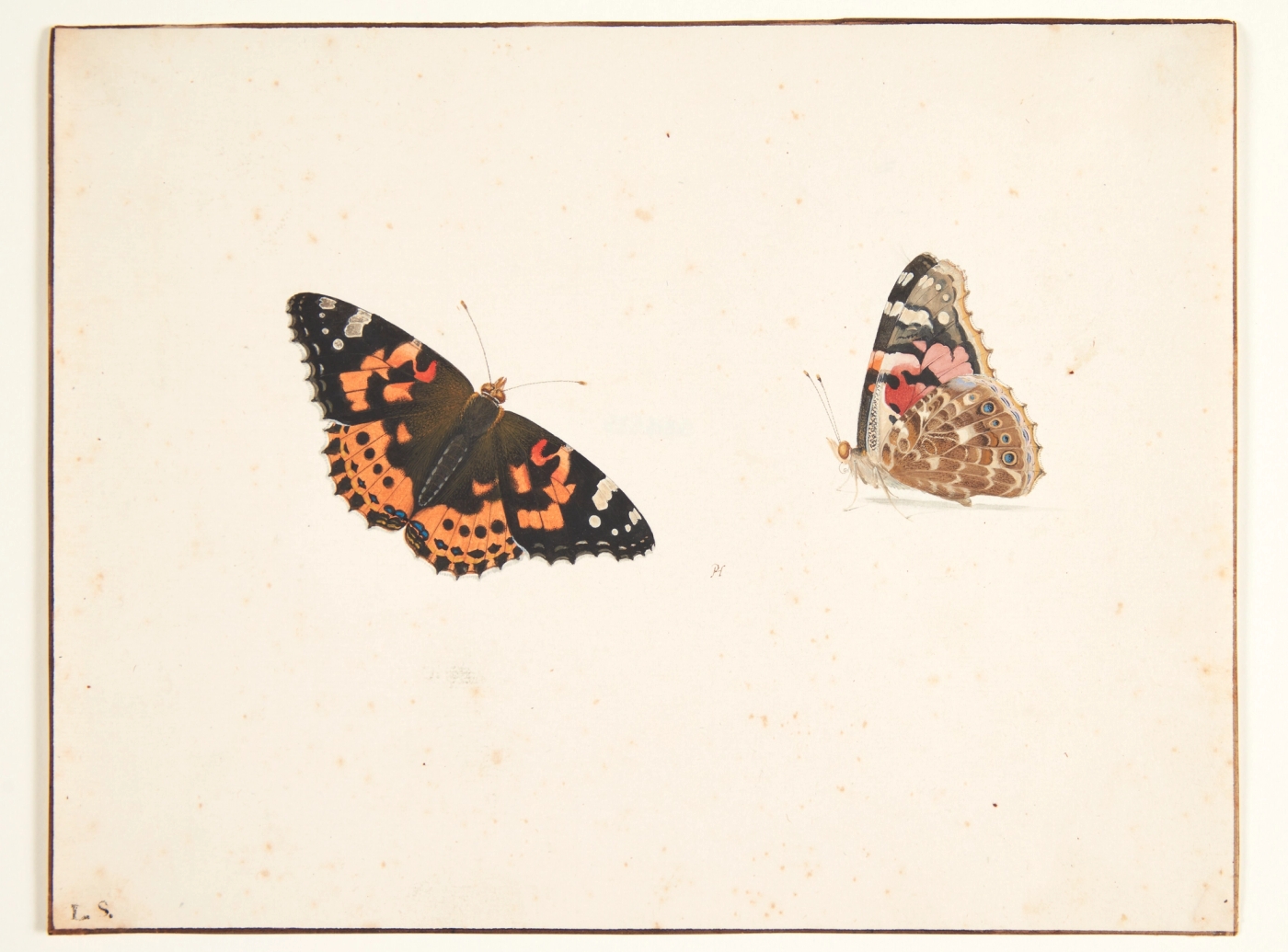
The store owner, utterly bemused, scratched his heavy chin and thought about it. Eventually, he said to check behind the old brickworks at the other end of Farrow Slips, because that’s where he’d recently seen lots of tortoiseshell butterflies. Now this surprised Alice because she took him to be a rather simple man — and certainly one lacking any knowledge of butterflies or their preference for laying eggs in nettle patches — but he was right about it. So there you go, people can always surprise you, she thought, feeling rather happy about the fact.
Alice picked some of the nettles while wearing her old leather gloves, storing the leaves with very little care in her jacket pockets. When she finished she drove to the church at the top of the main street. Old Ma’s grave was at the back where the limestone cliffs continuously dripped with water, forming a slippery black line edged with moss. Old Ma’s gravestone was modest because the family had always been very poor, but there was plenty of what Alice needed growing all over it: Cladonia arbuscula, perhaps the most beautiful of all the lichens.
“I don’t mean to vandalise you, Ma. But needs must and whatnot.”
Alice used Burt’s old keyring penknife to scrape the lichen from the stone, careful to keep the delicate stems intact as she placed them into a handkerchief.
“But you told me to do it, remember?”
Satisfied she had enough, she looked at Marcus, who was watching his master with some degree of curiosity. “What’s next?” she said. “Salt? Did we have enough salt already? I think we did. We needed peppercorns. Had enough salt. But I can’t remember checking the pantry...” She stood, as quick as she could, and so did Marcus, who seemed keen to leave.
“Ghosties giving you the willies, Marcus? I think we have enough salt. There’s always salt, isn’t there? Let’s go home.”
As Alice returned to her truck, three girls on bicycles rode past, calling her a crank and laughing as they yelled. It made her pause and think about what she was doing.
“They’re just young and testing their own meanness,” she said to Marcus as the old dog sniffed at a dandelion growing from a crack in the pavement.
“I don’t mind, if that’s what you’re thinking.”
On the journey home the weather turned. It had been a warm, bright morning, and that was a good thing for those lost boys, out there with him. But now the cloud had obscured the peaks of the Eaves Tor and a heavy shroud of mist was draped over the highest trees. Alice’s old heart sank.
“I hope it doesn’t rain,” she said. “I bloody hate the rain.”
As the sight of her lone, white house became visible, a mile or so from the road, she looked down at Marcus who was shaking with fear from the jarring movements of the truck as it rolled down the potholed road.
“But at least you’ll get a bath, you stinky old so-and-so.”
Back in her chair by the window Alice reviewed the dates she’d jotted down in her book and told Marcus they would be going for a walk later that day, come rain or shine, and he had better get used to the idea of coming home in the dark too.
“Will you be able to cope, my love? Will your legs carry you there, or do you really expect me to go on my own?”
Marcus, half asleep at her feet, seemed to sigh.
“I would hate to have to go on my own, but I shall if I must.”
With the dates committed to memory — being 1892, 1914, 1936, 1958, and 1980 — she placed the special items she’d collected from town on the kitchen table. She then took Burt’s ashes, kept in his old tobacco tin — a choice of container she found hilarious, given he had died of lung cancer — and placed them carefully nearby.
“What else, what else? Yes, yes. Salt.”
Alice took a large bowl and added a little fresh water from the stream — tap water would never do. Into it, she mixed three pinches of Burt, three pinches of salt, three pinches of ground black pepper, all the Cladonia arbuscula, pulped nettle leaves, and finally, three drops of her own blood, extracted from her ring finger with a pinprick.
Mixing the ingredients together, she made a thick, grey paste which she left to set before assembling her two figurines, one for each of the lost boys. These she crafted by binding hawthorn sticks with string, and once she was satisfied they were strong enough, she asked Marcus what he thought, taking his indifference as approval. She then added her paste to the figurines, forming more muscular shapes as she covered the hawthorn’s bark.
“Almost as good as Old Ma’s,” she said, admiring her work.
She set a fire going and used it to dry the figurines while meditating on the dates. By 3:03 p.m., she deemed the figurines complete and, much to her joy, the rain outside had already been and gone.
“That’s lovely about the weather,” she said, looking for her warmest coat. Marcus stood and — rather heroically for his character — stretched his spine in preparation, and she thought that was lovely too.
Most people don’t know a thing about Fiag Kenn, and of those who do, they know it only as the name of a low, pulpit-shaped peak marking the main route to the summit of Grandees Hook, the third-highest mountain in the Eaves Tor range. In no book or living memory — with the sole exception of Alice Jane Martha Harrowdown — was there any etymological explanation for the word. Once Alice was gone, the true origin of Fiag Kenn would be lost to time.
“Perhaps I should leave a note,” Alice remarked as she thought about this problem on her slow walk to the forest at the end of her land. “Come along, dog. Yes. I’ll leave a note in my will. Perhaps ensure that the Farrow Slips library logs some sort of historical record?”
She lamented being the last of her kind. With no child of her own, so much would be lost when she was gone. But while she lived, she would always do what she could to be of help, and that’s all anyone could ever do, she supposed.
“Crank!” she said. “I’d have shown them children so much if only they’d wanted to learn.”
They came to the first of the birch trees where the unknowing darkness of the forest brought Marcus to heel by Alice’s side. The sun was gone behind the mountains now and a wind was sweeping through the valley like it always did in the late afternoons.
They walked into the deep forest, very slowly making their way up to steeper ground until they came across the stream that officially marked the boundary of the Harrowdown land. They would need to walk several miles further and already Alice’s legs ached. Marcus walked nervously behind her, so silent she often had to turn to ensure he was still there.
It was almost dark when they reached the clearing. Ahead were miles upon miles of land belonging to the Harrison Boothe timber plantation. The River Eaves was further to the west, and in the north, many miles further still, was Igar Ren, the tallest peak in the Eaves Tor range. Turning to look back at the path they had taken, Alice could see the small white dot of her house and the curved track leading to it from the main road. The shape resembled a crescent moon, which was likely no coincidence, given her line of work.
Her legs were so frail and painful she was forced to sit upon the wet earth. Marcus used his long nose to push up one of her gloved hands and forced his head into her side. She fussed him and caught her breath.
“Just here is good, Marcus. Well, as good as I can make it.”
From her satchel Alice carefully removed the figurines. Holding one in each hand so that they faced one another, she whispered her first incantation. It was not much more than a gurgle of sounds from low in her throat, indeed, it barely made it to her lips, but it was a much-rehearsed and powerful performance that she was rather proud of by the time she had finished. She rekindled her strength and stood to face Igar Ren. The cairn she was here to focus on was some way off in the north, but not so far that her spell would not work. She placed the figurines in the earth, positioning them so that they faced the mountain, their brittle hands almost touching, and told Marcus to stay back. But the dog was unwilling to leave her side.
“Fine, fine. Just don’t go getting that big nose in the way,” she said as she placed her arms into the air, closed her eyes and listened to the sound of the wind. The trees at the northern edge of the clearing swayed. Was it him?
“Stay behind me, Marcus.”
She waited for several excruciating minutes, and then, unless her old ears had failed her, heard the crack of wood, followed moments later by a deep rumbling sound, like rockfall. She smirked. He really had come.
“Marcus, you must stay close, my love.” She glanced down at the dog. “And perhaps close your eyes. You don’t want his attention when he’s hungry.”
The dog cowered at her side as a gust of cool wind swept through the clearing, shaking the trees and whipping her hair against her face. Fiag Kenn’s gurgling roar bellowed up into the dimming sky, his breath — petrichor, she noted — was warm and strangely delicious.
That’s bloody marvellous, she thought.
The wind died back and Fiag Kenn stood at the edge of the clearing, half hidden in the gloom of the trees.
“He’s a big lad, isn’t he, Marcus?”
Marcus whined but Alice shushed him and began her next incantation. With her hands pressed together she closed her eyes and whispered and whistled the words, ending the spell with what anyone else might have taken to be a rather cocksure wink, but was in actuality the Herragher, or mound-of-the-forest greeting. In response Fiag Kenn seemed to grumble about having been summoned by delivering a series of low rumbling sounds. But his earthy, wet breath, she sensed with glee, was also a sign of acceptance.
“He’s willing to listen, Marcus. Or so it seems.”
Fiag Kenn moved out of the shadows and all twelve feet of him stood and stared at the strange little lady-beast and her even stranger fat wolf. His face was made of rock and was adorned with a lopsided beard of lichen. His eyes were only shadows formed by two hollow grooves. His skeletal limbs were made of a dark sinew and wood, seemingly held in place by tangles of vine, leather and moss.
Alice stepped back to reveal to the creature the figurines she had made for him. Fiag Kenn’s dark and cavernous eye sockets brightened as if, from deep inside his misshapen skull, a light was briefly kindled. The creature looked over its shoulder.
“The boys, Marcus. He’s not yet had his fill. We’re not too late.”
Alice crouched and began her third incantation, whistling and drawing air as she cast her old hands over the figurines. She recalled the words Old Ma had taught her when Alice was a little girl and only just learning the language of the mountains and forests and rivers and the hidden, ancient places. Her fingertips began to prickle with static electricity, and her hair rose upwards as if drawn by a puppeteer.
Oh, good grief, I’m good at this, she thought.
Fiag Kenn watched intently, his eye sockets glowing, the leaves upon his thin and crooked arms rustling and shaking.
“Give those boys back. Take these instead and have your fill on my spells.”
She bowed and watched the figurines, which now glowed about their crowns with a pale blue light, feeling her energy dissipate.
A shadow came. Alice looked up and the creature stood over her, his long and emaciated limbs towering up like some precarious, rotting scaffold, his stone face now black against the sky. Marcus cowered but she told him to hold his nerve. It’ll be over soon, my love.
Fiag Kenn, creaking and snapping, leaned down, but he did not inspect the figurines. The offering was of no interest. Instead he stared into Alice’s old eyes, and a long wooden hand gently removed the spectacles from her bemused face. Alice held her breath and reached slowly behind her to pull Marcus against her side, the dog trembling wildly with fear.
“It’s not what he wants, Marcus.”
She was confused.
“It’s not enough.”
Fiag Kenn dropped the spectacles to the ground and stared into Alice’s naked eyes.
“Oh bugger me,” she said as she let out a sigh of resignation. “So be it, then. So be it, you big bloody brute.”
The boys woke naked and starved in the darkness. Pale and grubby, they held onto each other as they crawled over wet rock and broken bones towards a thin circle of light. They had forgotten their language, forgotten their names and any memory of who they were or where they were. But they trusted one another, instinctively, just as they trusted that the light they saw was a thing of safety. Feebly, they helped guide each other out of the rancid cave and into the forest, where, perhaps, a distant helicopter could be heard for just the briefest of moments.
When they had found what was left of their clothing scattered about the forest floor and hanging from branches, they had remembered their names. Yet they had forgotten that only moments ago they had been naked and shivering and lost in a cave. By the time they had reached the river, where they drank until they almost vomited, they had no memory of ever having lost their clothes, like an early morning dream forgotten over breakfast.
It took a long time, but the river led them out of the forest and soon they could see old pastureland, and in the distance a small white house. They hobbled towards it, holding each other for support, their stomachs squealing for food.
They called out, but the house was empty and so they entered and found food and the remnants of a fire. Upon the kitchen table was a dirty baking bowl and in the pantry there was tinned fish which they greedily ate before falling asleep.
No one came, not that day nor the next. There was no phone in the house, no electricity even. They could hardly remember how they had come to be there. Sick with exhaustion, they ate more of the tinned food, their strength slowly returning. Still the owner did not come.
“There’s dog food,” said one of the boys. “Perhaps they are out hunting.”
“Perhaps. There’s a truck too.”
The boys searched for the keys and when they found them one of them said he would stay and wait to see if the owner would return, to explain what had happened. The other boy, who felt stronger and more able, hugged his friend and clambered guiltily into the truck and drove off in search of the town.
More from Creative

A love letter
Visual ArtA love letter to my home and my loves

Half-cooked
PoetryMy mother’s mother planted me // A world to return

Love notes from Bristol: Valentine’s Anti-Racism Action
Visual ArtI discovered Bristol United Against Racism via a poster on a disused telephone booth, layered upon a collage of weathered adverts.